
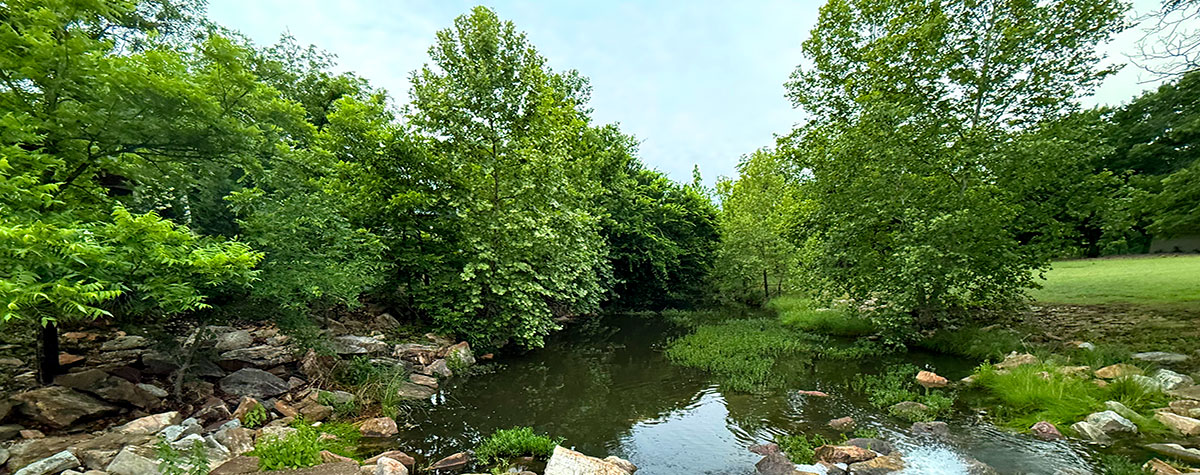
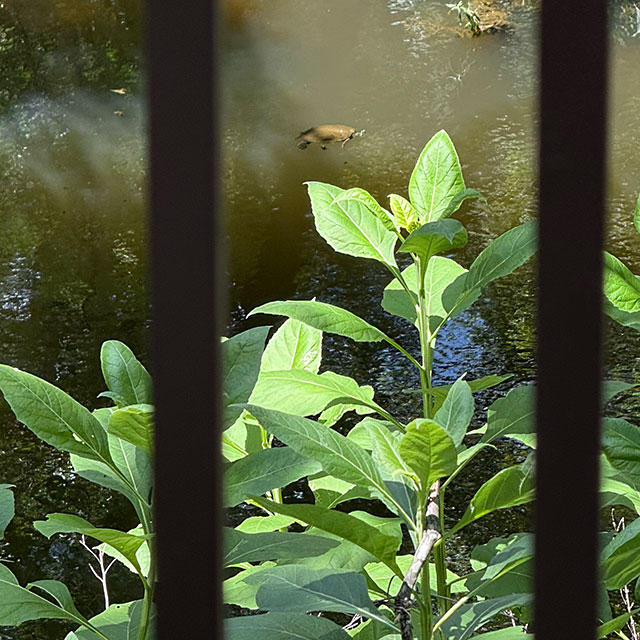
Well, hello there. I hope your day is going as swimmingly as mine, because I couldn’t ask for a nicer afternoon. I’m sitting in a chair overlooking the creek that runs behind our house, watching the turtles and fish float lazily downstream in the water, made semi-opaque (the water, not the critters) by the two inches of welcome rain the storms dumped on us last night. The air temperature is 80º but feels cooler than that in the shade cast by the pecan tree overhead and the light breeze that comes and goes — light enough to dispel the heat, but not the ever-present no-see-ums that seem to find me so attractive.
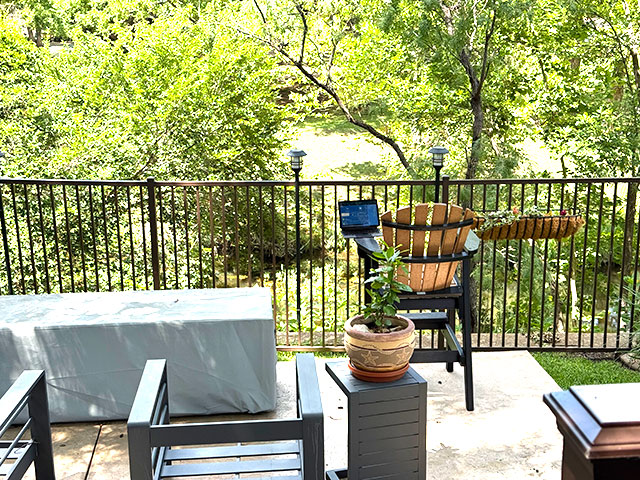
I’ve remarked to anyone who will listen — and to a few that won’t — that the abundant rainfall we’ve received over the past couple of months has made the landscape as lush and verdant (is that redundant?) as I can recall ever seeing it. The trees lining the creek and those in the common area across the way almost completely obscure the view of the trail that circles our neighborhood, and the amenities center 150 yards distant.
We’ve been disappointed many times in the past by the unfulfilled promise of an El Niño weather pattern, but this one seems to be taking its responsibilities seriously.
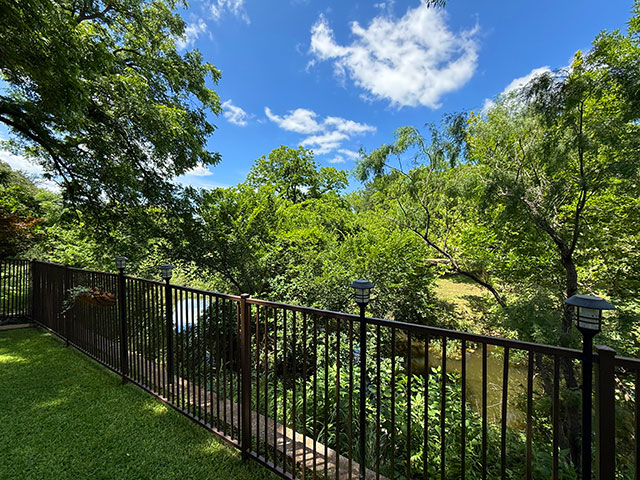
The wisps of clouds floating in the rain-washed sky serve to enhance the pastoral scene, and the incessant calls of birds (identified in turn by the Merlin app on my phone as Northern Cardinal, Carolina Wren, and Golden-fronted Woodpecker; I concur with the first two IDs, but I’m less sure about the third one) are almost successful in distracting me from the hum of the pool heater across the way, and the voices of the folks attempting to repair a leak in the pool equipment that’s shut down the use of that facility for a day or two…a reminder that I’m not completely isolated from civilization.
Days like this are a special blessing, especially considering that it wasn’t that long ago that we were acosted by temperatures nearing 100º. Those will come again, and sooner than any of us would like, and the mosquitos will reappear to make what I’m doing now an intolerable ordeal. But that’s in the future; the present is all I have right now, and it’s very good.
Debbie and I continue to be infatuated with our two magnolia trees; I’ve written about them in the past. We planted them in 2022, to replace the beautiful loquat tree we lost to the great ice storm of the previous winter, and last summer was the first time we were graced with the presence of a bloom or two on one of them. And this summer, both trees are sporting blooms. I realize that for some of you, this is old hat (I use that term in its early 20th-century meaning, and not in its much more vulgar meaning from the 17th century…but I’m sure you could figure that out from context), but it’s still new and cool to us.
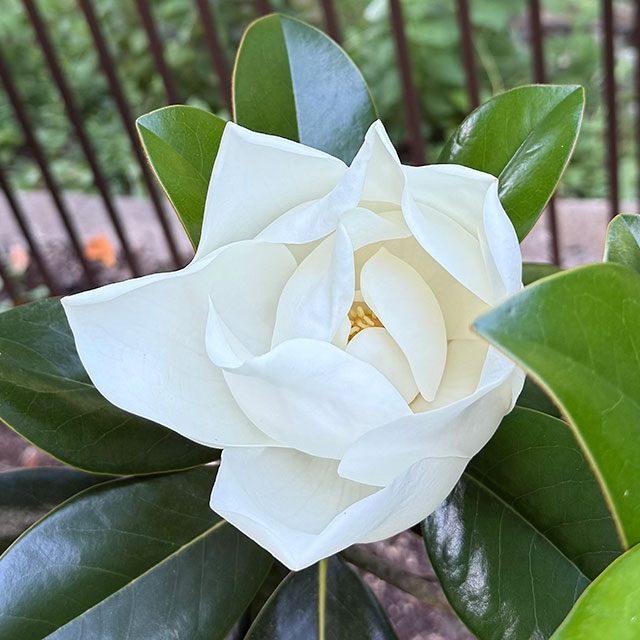
Apart from the intoxicating aroma from the blooms – which, incidentally and irrelevantly is much less apparent to Debbie than to me — what fascinates me most about magnolia blooms is their short lifespans. I’m surprised that some of the Biblical scribes didn’t use the magnolia bloom as a picture for the relative fleetness of our own lives. You know what I mean; instead of from dust to dust, they could have said to from bloom to doom…OK, I see the problem there. Never mind.
Anyway, I took a series of photos of a single bloom and time-stamped them to illustrate the almost hour-to-hour progression of its life.
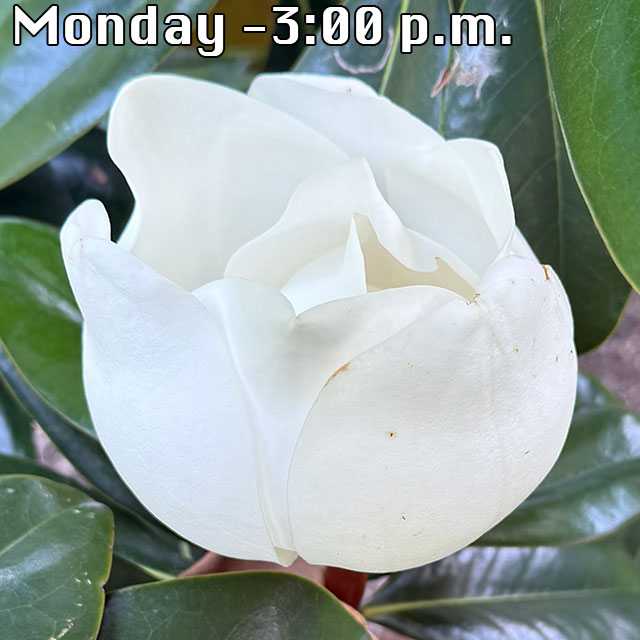
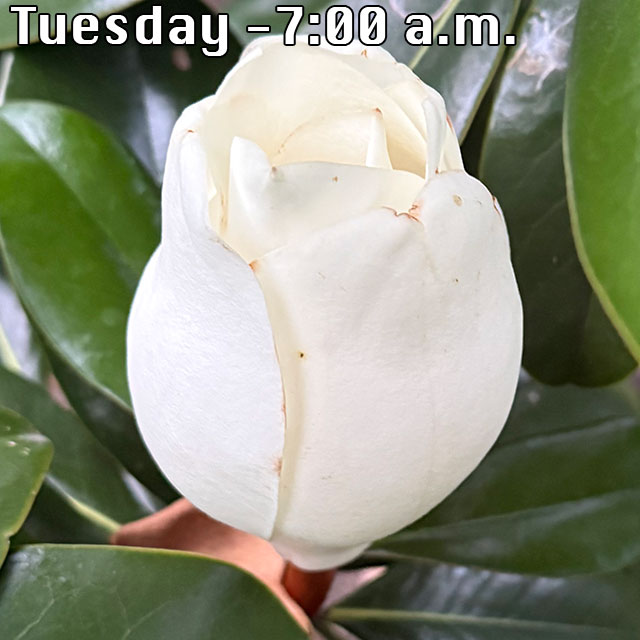
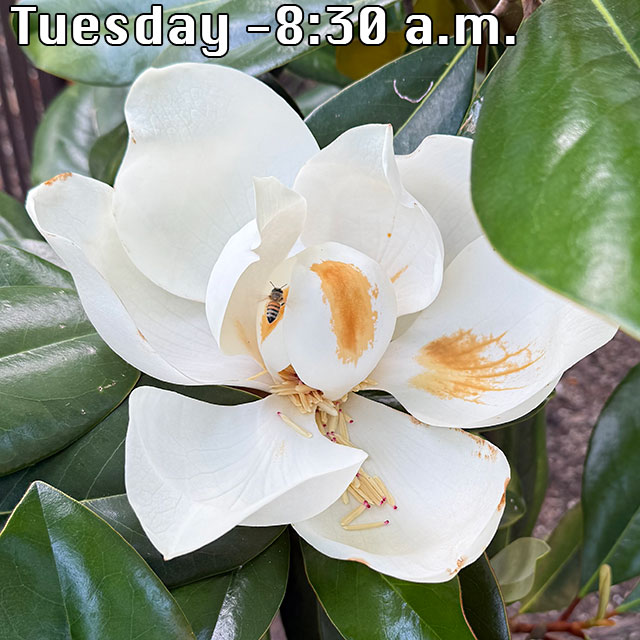
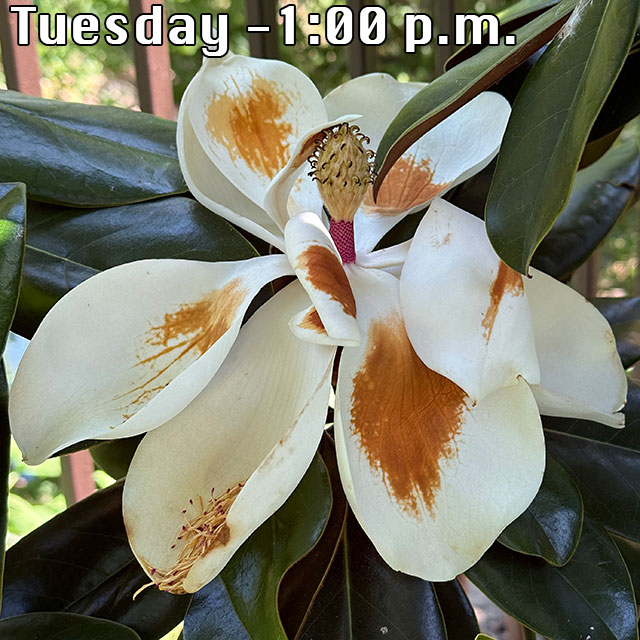
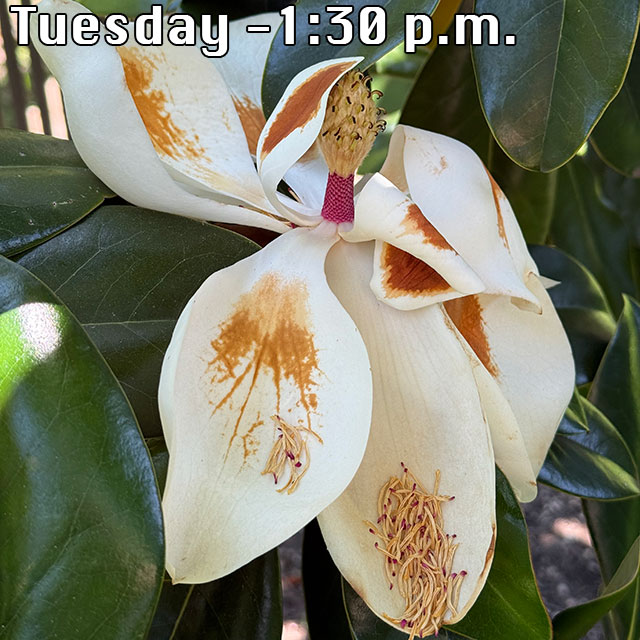
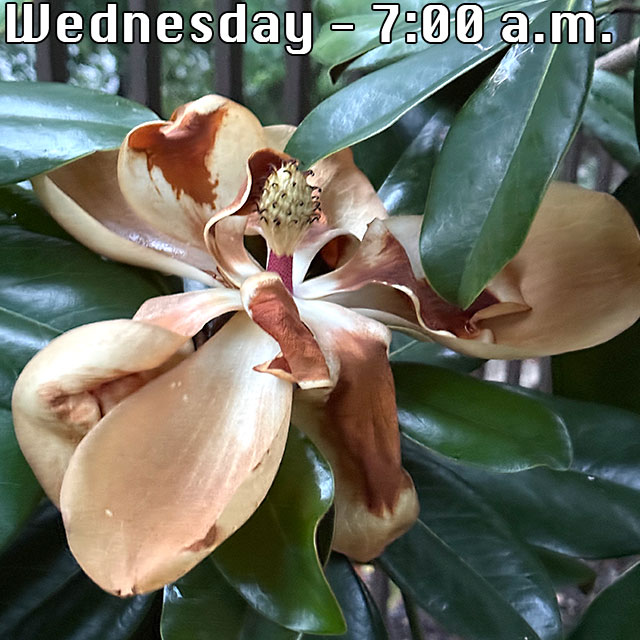
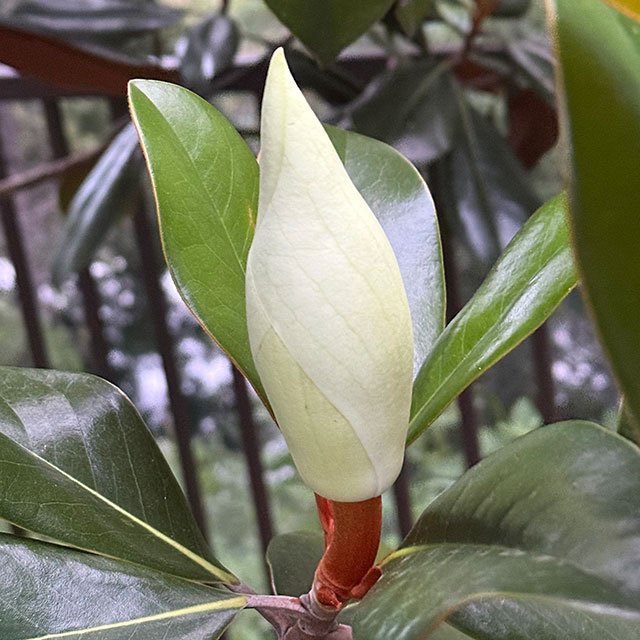
We’ve counted four or five potential blooms like the one shown below, but whether they’ll make it to maturity is an open question. There’s a long list of reasons that I’ve grown to despise squirrels, and near the top of the list is their penchant for snipping off magnolia blooms before they have chance to open.


Snakey (Snaky?) Video Ahead
Snake season is upon us here in the heart of Texas. No, that’s not an “official” designation, but it’s what I call this time of the year when the warm weather invigorates all of the wildlife around here, and the food chain becomes especially active. That inevitably means more serpent sightings.
We have a lawn service that mows the grass once a week, normally on Thursday. But this week, in what would have normally been a show of unfounded confidence, they came on Tuesday (yesterday as I write this) in anticipation of rain. After they left, I wandered into the front yard to inspect it — our zoysia is finally overtaking the clover and other weeds that took advantage of my failure to apply pre-emergent on time — and I spotted something in the grass that seemed out of place.
I tried to take a photo and then a video, but ended up with only the following video:
This speedy critter is a Western coachwhip (Masticophis flagellum testaceus). It’s a harmless (to humans) eater of anything it can catch, including other snakes, even venomous species…so it’s one of the Good Guys.
As the video demonstrates, it’s one of the fastest snakes in North America, but hardly a gold medal winner (I took a deep dive — some might even say it was a ridiculously deep dive, and I wouldn’t argue with them — into the world of speedy snakes a few years back). It’s also one of the longest snakes in Texas, typically reaching lengths of four-to-six feet (the record is eight feet).
I realize that some of you will recoil (no pun intended) at the thought, but Debbie and I always enjoy spotting these creatures around our property. The sightings are increasingly rare as residential development continues to overtake natural habitat; we no longer have vacant lots on both sides of ours, so these sightings are reminder that there’s still wildlife to be experienced despite our best attempts to “sanitize” our surroundings.
Discover more from The Fire Ant Gazette
Subscribe to get the latest posts sent to your email.
I love Magnolia trees. At least the blooms last longer than Gardenias! Both so beautiful! Enjoy !!!
Hi, Jen! Well, we’ve never had gardenias, so I didn’t know anything about them, other than the blooms kinda resemble magnolias (I think…?). But, yeah, the trees are so beautiful, and they are now getting big enough to provide even more privacy to our back yard.
We like Magnolias around here since Tammy is from Mississippi. We also despise squirrels; they have chewed up so many outdoor cushions! We have put one previously gnawed cushion under their favorite tree in hopes they will focus on finishing the destruction they’ve already started. I don’t think they like ABC (already been chewed) cushions.
Lee, I’m not sure about the “already been chewed” thing, but I can tell you that we’ve had some success by spraying a bit of peppermint oil on outdoor cushions. They seem to not like that smell.
Sounds like a lovely time in the hill country❤️
That it was, Brenda!
We are enjoying The Fire Ant Gazette!
Even the snake video?! 🤣
I’m very happy to hear from you; thanks for stopping by!