
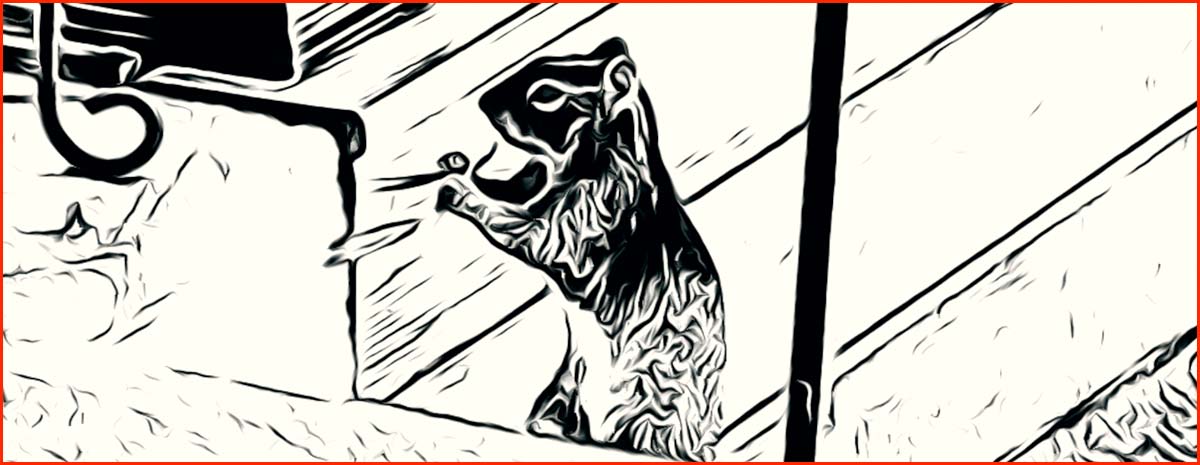
Hello again, and welcome to another edition of Neighborhood Nature. Today is National Martini Day, and while I’m not saying that a dirty vodka martini would enhance your enjoyment of this post, I’m also not not saying that.
Last Monday’s torrential rains (>5″ in a short period), when added to the heavy downpours of May and early June, have resulted in what I would call a very happy landscape full of happy organisms, some of which we don’t see on a regular basis.
Alert Gazette readers will recall this post from a few weeks ago wherein I documented an observation of mushrooms called magpie inkcaps. They sprang forth after a heavy rain, and dissolved and disappeared a day or two later.
Earlier this week, I ran across — and I mean that literally — another larger gathering of small mushrooms. I was out for an early morning jog on the cart path along the #9 fairway of the Ram Rock golf course (for you local readers) when I spotted several “communities” of tiny, parasol-shaped mushrooms.
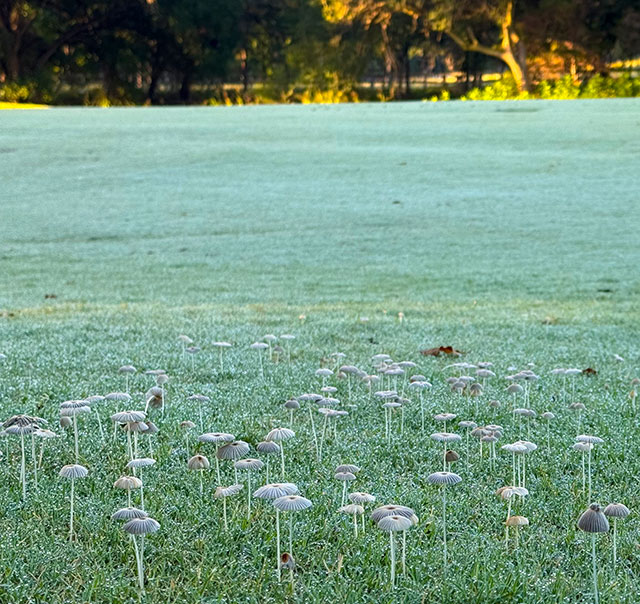
These are pleated inkcap mushrooms (Parasola plicatilis); they may also be referred to as Japanese parasols. Their caps average about 1 1/2″ in width, and they stand less than 3″ tall. Each of the groups I spotted were in the shade of large trees; they quickly succumb to direct sunlight. It’s not unusual to see them spring up after a rain, although I’ve rarely seen them in such large quantities.
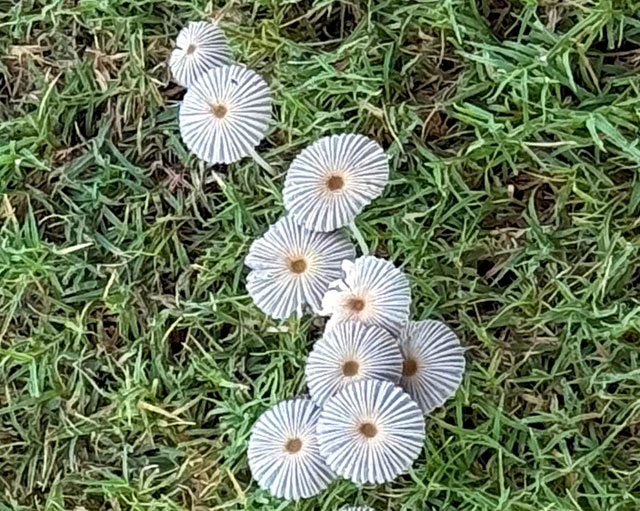
By the way, while these mushrooms aren’t poisonous, they are considered inedible, and might cause some gastric distress if eaten. You’ve been warned.
Entering a Huge Rabbit Hole Humans and fungi have one key characteristic in common — well, perhaps more than one, but lets not get into personality traits — we and they are heterotrophs, meaning that we and they have to get our food from our environment. (Non-heterotrophs are called autotrophs; they produce their own nutrients. Plants and algae are autotrophs, using photosynthesis to produce the organic molecules that sustain life.)
One way that scientists classify mushrooms is according to the way the fungi which produces them get nutrition. (Did you catch that little tidbit? Mushrooms are not, in and of themselves, fungi; they are the fruited bodies produced by fungi, aka the spore-producing, reproductive structures of fungi. I was today years old when I learned that.) Pleated inkcaps are saprotropic, meaning that they feed on dead organic matter…in this case, decomposing grass clippings and other plant detritus.
The other types of mushrooms in this system are mycorrhizal (they have symbiotic, mutually beneficial relationships with the organisms that feed them), parasitic (should be self-explanatory; they extract nutrients from the host organism’s living tissue, damaging and even killing it [insert your own anecdote about the brother-in-law living in his parents’ basement]), and endophytic (they actually live inside the host’s tissue and cells, but do not cause damage or disease; this category is worthy of much more discussion — it’s not well-understood and has some fascinating implications. Also, endophytic fungi don’t actually produce mushrooms, at least as far as anyone knows.).
If you’re wondering why you should care about any of this, the main takeaway is that if you encounter saprotropic mushrooms in your garden or flowerbeds, leave them alone as they recycle nutrients and are therefore beneficial.

Let’s move along to more animated organisms, shall we? I’ve written at length about the rock squirrels that inhabit the banks of the creek behind our house (and sometimes the space under our back yard deck) so I’m not going to rehash any of their physical and behavioral characteristics. But I did have a chance to observe something new, and there’s a hint in the image at the top of this post.
I knew that they are omnivores; they eat primarily leaves, stems, seeds, and nuts but they will also eat small invertebrates (e.g. grasshoppers and beetles) and vertebrates (e.g. young birds; they will sometimes even scavenge deceased animals). I’ve never had the chance to observe one doing anything in our yard besides digging up pecans. But a couple of days ago, I looked out the living room sliding glass door in time to see this one chowing down on our St. Augustine lawn. I was able to capture the following video.
While I’m not happy about the potential for lawn destruction, in reality they don’t do enough damage to matter (unlike tree squirrels, which I now consider to be only a rung or two above demon spawn). And I have to admit that the one in the video is pretty darn cute.
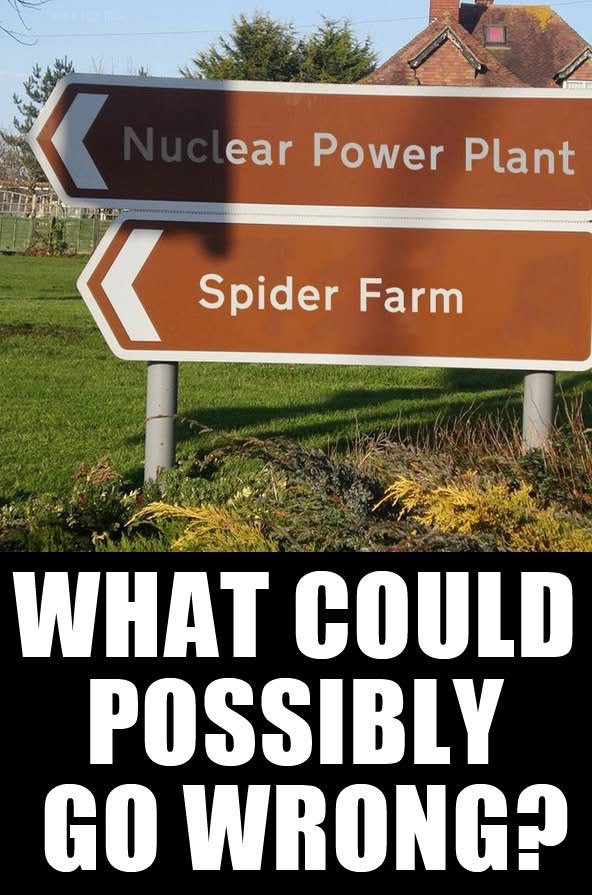
Well, I had some more sightings I was going to share, but I got carried away with the mushroom thing, so I’ll defer that content to a later date. Instead, I’ll leave you with this, and let you ponder the horrific implications associated with the possibility that such a thing as a spider farm might actually exist.
Discover more from The Fire Ant Gazette
Subscribe to get the latest posts sent to your email.