

According to the research gnomes living in the Gazette’s archive catacombs, it’s been more that 18 months since I devoted valuable blogging space to the random flotsam and jetsam that clog the browsers on my various devices. And since today just happens to be National Browser Tab Clearing Day (as far as you know without googling it for confirmation, and not to be confused with National Clean Out Your Computer Day, which is totally lame), I offer the following delectable tidbits for your virtual consumption, in no particular order (or logic, for that matter).

Table of Contents (because not everything is for everyone every time)
- For people who eat food
- For people who drive cars
- For people who like weird musical instruments
- For people who shave their faces
- For people who like hydration breaks
- For people who punctuate (Pt. 1)
- For people who punctuate (Pt. 2)
- For people who like quick hits
- For people who just want to get this over with
For people who eat food…
Our local independent grocery store punches above its weight in a number of ways. Its meat market and deli match up well with any large grocery chain’s offerings, and it often carries “limited edition” specialty items. I just discovered these D’VINE Stuffed Churro Bites temptingly laid out in the end cap of the checkout line, and my life will never be the same.
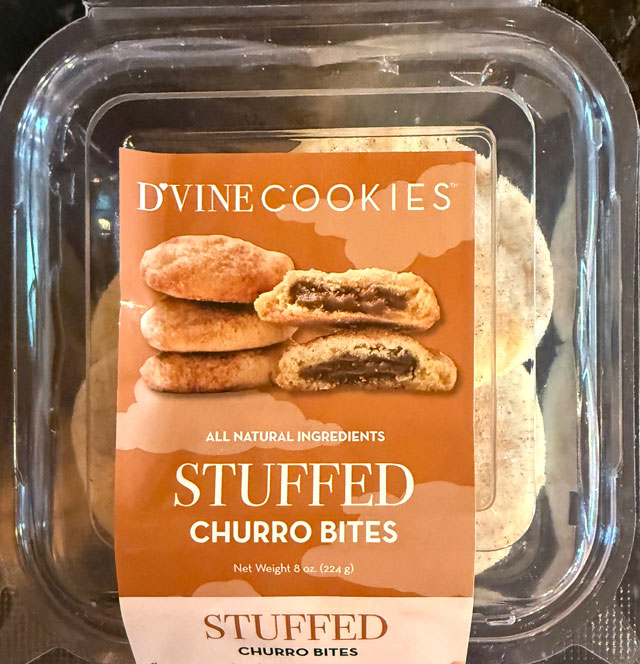
Now, I will say that they lack the crunch of actual churros and if I didn’t know better I would have called them stuffed snickerdoodle bites, but there is definitely a hint of churro flavor. Regardless, son muy sabrosos, and you should try them if you can find them (you can order online, and Target stores might have them in stock). The company also makes Stuffed Strawberry Shortcake Bites, and that’s next on my list of Things To Eat That I Probably Shouldn’t.
For people who drive cars…

This glorious piece of automotive sculpture is the Koenigsegg Jesko Absolut, which is [possibly] Swedish for “you can’t afford me and you can’t catch me.” This street-legal (!), 1600 horsepower, rear-wheel-drive, V8-engine-powered spaceship with tires (or tyres, if you’re reading this from your villa on the Continent) just set a world record for 0-200-0 (those are in miles per hour; we don’t care about no steenkin’ metric stuff) in 28.27 seconds. And for you old-school stock drag racers, it laid down an 8.54 second quarter mile — that’s pretty good right? — and 190 mph at finish. You should get one if you want to shame that braggard Telsa Plaid owner, but keep in mind that you could buy twelve — one for each month of the year! — Corvette ZR1Xs for the price ($3 million and up).
For people who like weird musical instruments…
Psych! I was going to devote a paragraph to the gizmo in the following photo, but when I started doing a little research on it, I realized that it will warrant significantly more attention. So stay tuned, and I think you’ll agree. So would Ben Franklin, were he not, you know, dead.

For people who shave their faces…
Here’s another consumer recommendation, mainly for you folks of the masculine persuasion, but I’m not judging, regardless. I’ve used an electric shaver for as long as I can remember, and I’ve never been happy with the results. So I also often follow-up with a blade for those unavoidable occasions that might require me to be around other people who might have good eyesight. And, also for decades, I’ve used old school/old guy Barbasol shaving cream. It’s been OK, and I like the way it smells…takes me back to when barber poles were a thing, hanging outside of venues that were actually called barbershops.
Fast forward to a couple of weeks ago, and I read a rather glowing review of Jack Black Supreme Creme Triple Cushion® Shave Lather (brand consultants get paid by the word, apparently) and I thought, what the heck…I’ll give it a try. A three-pack was deposited on our front porch the next day by a considerate Amazon driver, and I tried it the following morning…and my life will never be the same (at least, not the ten minutes occasionally devoted to scraping my face skin with a piece of metal).

So many things today fail to live up to the hype surrounding them; this is not one of those things. I’ve never had a closer nor more comfortable shave, and I don’t care one whit that it might be due to the macadamia nut oil and soy. It’s significantly more expensive than Barbasol but — as “they” say — I’m worth it. (By the way, the actor/musician named Jack Black is not connected in any way to the skin care brand.)
For people who like hydration breaks…
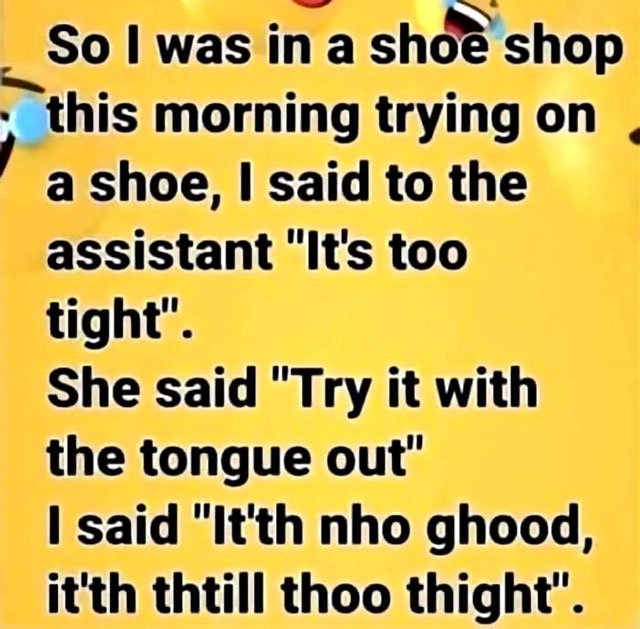
Please limit this interlude to three minutes.

For people who punctuate (Pt. 1)…
Much like the dogs used to sniff out and alert humans to the presence of killer cyborgs in Terminator, we need a foolproof — but more indestructible — method of the detecting AI-generated content that’s infiltrating every aspect of our lives. There seems to be a growing sentiment that the answer rests in…punctuation…in the em dash, to be specific.
You’re familiar with the em dash, right? It looks like this: —. It’s so named because back in the dark ages, before Microsoft Word — and even before WordStar — the dash was the same width as the letter “M” (the uppercase is important). Nowadays, given the plethora of easily accessible fonts, that relationship is no longer important, but the use of the dash apparently is to those who seek to identify chatbot-generated text. I haven’t noticed this myself, but “they” say that AI agents tend to employ the em dash more frequently than humans and so it’s a dead giveaway that em-dash-filled text was generated by a chatbot. Except when it’s not.
This idea has given rise to manifold human dash defenders. Here’s one, and another, and yet another (this one may be behind a NYT paywall). And — of course — there’s me, a proud [over]user. So, is the frequent use of this piece of punctuation really a reliable indicator of AI-ness?
I asked ChatGPT to weigh in on the issue. (Smart, huh? Like, “we’re on to you, dude…so you might as well come clean.”) I won’t repeat the entire conversation because it’s lengthy and full of asides — I enjoy the dialogues with ChatGPT because they tend to be more interesting than those I have with the voices in my head — but here are the main points it made:
AI usage of em dashes stems from the facts that:
- Good writers often love em dashes. (I can’t argue with that!)
- People are now looking for them. (Psychology at work)
- AI chatbots don’t consciously think about using em dashes to the exclusion of other punctuation. “Think” is its word, not mine, which is mildly alarming at some level. But they do — or at least ChatGPT says it does — respond to what they know about the user. Here’s a direct quote: …my responses are influenced by instructions, context, and learned patterns. If a user prefers a different style, I naturally drift toward it. IOW, if ChatGPT sees that I tend to [over]use em dashes, it will likely also employ them in conversations with me.
Now, back to the question of whether em dashes are useful for AI detection, the most significant — and, again, possibly scary — factor is now that all the arm-waving about it is spreading, chatbots will naturally notice and adapt their behavior and responses accordingly. We can play whack-a-mole with them until the cows come home but, frankly, we’ll never win that particular game.
My advice? Use whatever punctuation you want, whenever and however — even sky commas — and don’t read too much, if anything, into how others are using it.
For people who punctuate (Pt. 2)…
And speaking of sky commas… (not to be confused with dirt dots), the following video was recommended to me by my [old but possibly better looking, but definitely shorter] cousin, Marshall (shout out!), and I found it to be pretty hilarious. Watch the whole thing if you have time — there’s a mild scatalogical epithet near the beginning, if you’re sensitive to such — but at least play it from where it fires up and you’ll see the reference to you-know-what. This will also fulfill my pledge to my cuz to use the term somewhere soon — and I’m all about fulfilling pledges. And using em dashes.
For people who like quick hits (no that kind…put away the bong, Lebowski)…
You can probably tell that I’m just phoning this in now. Or can you? Would AI do it this way?
- Texas A&M Biologist Dr. Christine Merlin Featured in The New York Times for Breakthrough Research on Monarch Navigation — The title of the article, published on A&M’s biology website, kind of buries the lede that the NYT article used. Dr. Merlin is performing brain surgery on butterflies to figure out how they can navigate their annual thousands-of-miles migrations.
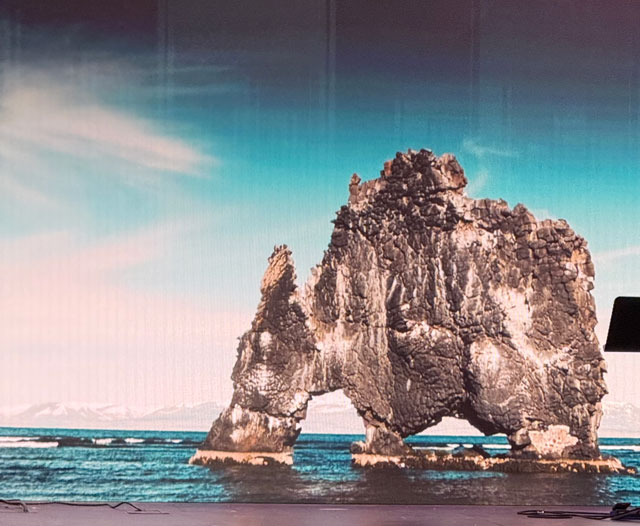
- Below is a picture of Hvítserkur, a big honkin’ rock located in Iceland’s Húnaflói Bay. I took this photo during a Sunday morning worship service in May as it was projected onto the screen in our church. I have no idea why someone thought to put up a photo of a rock that looks like a buffalo/hippo/mastadon/dragon/troll (that’s what the original Icelanders thought it resembled). Regardless, it’s a striking bit of lithology and the Wikipedia article linked above is worth reading.
- You might think you know how bar codes work, but do you really? For example, did you know that bar scanners read the white spaces, not the black lines? *mind blown* For more bar scanner trivia, check out this page.
- Here’s another wonder from the natural world. Research has recently shown that at least one species of assassin bug (Pristhesancus plagipennis), native to Australia (of course), produces two types of venom in two different glands, and each type of venom is employed in different situations. One is used as a defensive mechanism (to ward off predators that are harrassing the bug), and the other is used offensively — that is, it paralyzes and kill prey insects.
I might marvel at this adaptation, but I’m not fond of this species as it’s been known to prey on honeybees. Fortunately, Australia is not a close neighbor. - I’m sure you’re familiar with palindrome — a word or phrase that reads the same forwards and backwards, but what about the backwards version of that word…emordnilap? Is that even a real word? Well, it certainly is. You might know or have figured out — if you’re some kind of dyslexic savant — that the word is palindrome spelled backwards, and it’s defined as a word that becomes a different word when spelled backwards. In the linked article, stop and pots are examples.
So what?, you’re no doubt thinking, and that’s fair. I suggest you have an Evian right now, go with the flow, and try not to nod off until you’ve laid the question to rest.
(And then count the number of emordnilaps in that last sentence.) - Let’s bring this unwieldy vessel to a shaky landing via a brief discussion of drone warfare. Just when you thought it was safe to go back into the sky, or even your backyard, China has launched an aircraft capable of carrying — and launching — a swarm of more than six tons of drones to a target more than 4,000 miles away. (That’s approximately the distance from Beijing and Anchorage, Alaska; draw your own conclusions.)
Oh, did I forget to mention that the aircraft in question is itself a drone? Silly me.

For people who just want to get this over with…

Discover more from The Fire Ant Gazette
Subscribe to get the latest posts sent to your email.
Eric, I love to read your “stuff-”
You are so funny!
Thanks for reading, Audrey…it keeps me motivated! 🤗